
Help Your Child With Worries
Childhood worries are more common than most parents realize — and kids can absolutely learn to manage them. Learn the signs, understand what's happening, and discover what actually helps kids feel calmer and more confident.
2 minutes. No commitment.
Childhood Worries by the Numbers
children struggle with persistent worries or big emotions before age 18
National Institute of Mental Health
of children who struggle with worries are not getting the support they need
Anxiety & Depression Association of America
children ages 3-17 in the U.S. are struggling with everyday worries and big emotions
CDC, 2023
increase in children struggling with worries over the past decade
Journal of the American Academy of Child & Adolescent Psychiatry
What Do Childhood Worries Actually Look Like?
Worries in children don't always look like what adults expect. While some kids openly express concern, many show their struggles through behavior changes, physical complaints, or avoidance patterns that can be mistaken for defiance, laziness, or simply "being shy."
Emotional Signs
Frequent worry about things that haven't happened yet. Catastrophic thinking — assuming the worst possible outcome. Difficulty calming down once upset. Irritability that seems disproportionate to the situation. A persistent need for reassurance from parents, teachers, or friends. Fear of making mistakes, even in low-stakes situations.
Physical Symptoms
Recurring stomachaches or headaches with no medical explanation. Difficulty falling asleep or staying asleep. Changes in appetite — eating significantly more or less than usual. Muscle tension, fidgeting, or restlessness. Complaints of feeling "weird" or "dizzy" in social situations. Frequent trips to the school nurse.
Warning Signs in Everyday Behavior
Avoiding activities they once enjoyed — sports, birthday parties, sleepovers. Refusing to go to school or making excuses to stay home. Meltdowns before transitions or new experiences. Excessive time spent on homework due to perfectionism. Withdrawal from friends or reluctance to speak in groups. Clinging to parents in age-inappropriate ways.
“Worries in children are not a character flaw — they're a signal that their nervous system needs better tools. With the right support, children don't just cope; they thrive.”
Dr. Rachel Busman
Child Development Expert, Child Mind Institute
Child Mind Institute, 2024
Why Does My Child Worry So Much? Understanding the Root Causes
Childhood worries rarely have a single cause. They develop from an interaction between a child's temperament, their experiences, and the world they're growing up in. Understanding these factors can help you respond with empathy rather than frustration.
Biological Factors
Genetics play a meaningful role — children of parents who worry a lot are two to seven times more likely to struggle with persistent worries themselves. Some children are born with a more reactive amygdala, the brain's threat-detection center, which makes them more sensitive to uncertainty and perceived danger. This isn't something they can control, and it doesn't mean they're "weak" — their brain is simply wired to be more vigilant.
Environmental Pressures
Academic pressure has intensified at younger and younger ages. Social media and constant connectivity expose children to comparison and conflict they aren't developmentally equipped to process. The COVID-19 pandemic disrupted routines, isolated children from peers, and introduced uncertainty that many kids are still processing years later. Family stress, whether financial, relational, or health-related, also shapes a child's sense of safety.
Learned Patterns
Children learn emotional responses by watching the adults around them. If a parent responds to uncertainty with visible worry, children often internalize the message that the world is dangerous. Over-accommodation — removing every source of discomfort from a child's life — can also backfire. When kids never learn to sit with discomfort, even minor challenges start to feel overwhelming.
Not Sure If Your Child Needs Support?
Our free 2-minute assessment helps you understand your child's emotional needs and matches them with the right coaching group. No commitment, no pressure.
2 minutes. No commitment.
What Actually Helps: Evidence-Based Approaches
Research consistently points to a few core strategies that help worried children build lasting resilience. The most effective approaches don't try to eliminate worries — they teach children how to understand them, tolerate them, and respond with confidence.
Thought-Reframing Strategies
Evidence-based thought-reframing techniques are among the most researched and effective approaches for helping children manage worries. At their core, these strategies teach children to notice worried thoughts, evaluate whether those thoughts are accurate, and replace them with more balanced thinking. For example, a child who thinks "Everyone will laugh at me if I raise my hand" learns to ask: "Has that actually happened before? What's the most likely outcome?" Over time, these thinking patterns become automatic. Research shows that structured thought-reframing programs help 60-80% of children who complete a full course.
Social-Emotional Learning (SEL)
SEL programs teach the foundational skills that worried children often lack: self-awareness, self-management, social awareness, relationship skills, and responsible decision-making. Research from CASEL (the Collaborative for Academic, Social, and Emotional Learning) shows that children in quality SEL programs show an 11-percentile gain in academic achievement and significant reductions in emotional distress. For children who struggle with worries, SEL provides a structured way to practice emotional regulation in a safe, peer-supported environment.
Gradual Exposure and Brave Behavior
Avoidance feeds worries. The more a child avoids what scares them, the scarier it becomes. Gradual exposure — facing fears in small, manageable steps — is one of the most powerful tools for reducing worries. This doesn't mean forcing a child into their worst fear. It means creating a ladder of brave steps. A child afraid of speaking in class might start by answering one question to a trusted friend, then to a small group, then to the whole class. Each step builds evidence that they can handle discomfort.
The Power of Peer Learning
Children learn emotional skills more effectively in groups than in isolation. When a worried child sees a peer successfully manage a tough moment, it creates a powerful model: "If they can do it, maybe I can too." Group settings also provide natural practice for social confidence — learning to speak up, disagree respectfully, and receive feedback in a safe environment. Research published in the Journal of Clinical Child & Adolescent Psychology found that group-based programs are as effective as one-on-one approaches for helping children with worries, with the added benefit of social skill development.
How tapouts Helps Children Who Worry
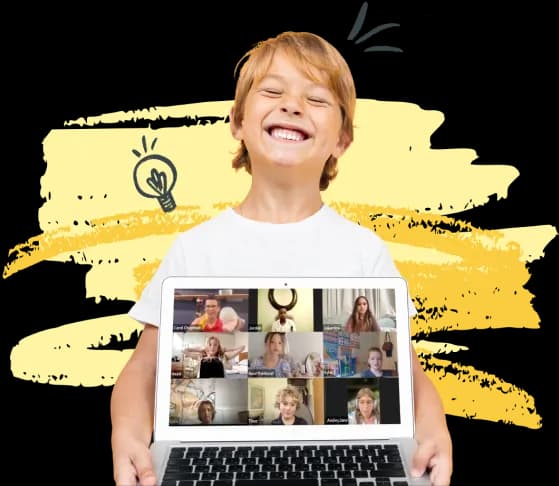
tapouts combines the most effective evidence-based strategies — thought-reframing principles, SEL curriculum, gradual exposure, and peer learning — into a format that kids actually enjoy: small weekly group coaching sessions led by expert coaches.
Small Groups, Big Impact
Each group has just 4-6 children matched by age and challenge area. Your child isn't alone in their struggle — they're surrounded by peers who understand exactly what they're going through. This normalizes their experience and reduces the shame that often accompanies big worries.
Expert Coaches, Not Generic Content
Every tapouts coach has 20+ years of experience in child development, education, or coaching. They're trained to create a safe, engaging environment where children feel comfortable taking emotional risks. They know when to push and when to provide support.
Skills That Transfer to Real Life
Sessions aren't abstract exercises. Children learn specific, practical tools — breathing techniques for overwhelming moments, thought-challenging scripts for bedtime worry, brave behavior plans for school situations — and practice them in the group before using them in daily life.
Fun That Keeps Them Coming Back
The hardest part of helping a worried child is getting them to engage consistently. tapouts sessions use games, challenges, and a points-and-prizes system that makes emotional learning feel like play. Kids want to come back — which is the only way real change happens.
Progress Parents Can See
Parents receive regular updates on their child's progress, including specific skills mastered and coach observations. Most families report visible changes within 4-6 weeks: fewer meltdowns, more willingness to try new things, and calmer responses to challenges.
tapouts vs. Traditional Approaches
| Other Programs | tapouts | |
|---|---|---|
| Format | 1-on-1 sessions | Small group coaching (4-6 kids) |
| Peer learning | No peer interaction | Children learn from and support each other |
| Cost | $150-300 per session | $37 per week ($149/4 weeks) |
| Waitlist | Often 3-6 months | Start within 1-2 weeks |
| Engagement | Can feel formal and intimidating for children | Game-based, fun sessions kids look forward to |
| Social skills | Limited to one-on-one relationship | Practice with real peers in real time |
| Consistency | Weekly, often varies | Same coach, same group, same time every week |
The Research Behind Our Approach
Group-based skill-building programs are as effective as individual approaches for helping children manage worries, with the added benefit of peer modeling and social skill development.
Manassis, K. et al. (2016). Journal of the American Academy of Child & Adolescent Psychiatry
SEL programs produce an average 11-percentile-point gain in academic achievement and significant improvements in social-emotional skills, attitudes, and behavior.
Durlak, J. A. et al. (2011). Child Development, 82(1), 405-432
Children who completed a structured confidence-building program showed a 60% reduction in risk of developing persistent worries over a 12-month follow-up period.
Rapee, R. M. et al. (2013). Journal of the American Medical Association Psychiatry
Early support for childhood worries reduces the likelihood of ongoing emotional struggles in adolescence by up to 50%.
Bittner, A. et al. (2007). Journal of Clinical Child & Adolescent Psychology
What Parents Can Do at Home
While professional support makes a significant difference, parents play the most important role in helping a worried child. Here are strategies you can start using today.
Validate, Don't Dismiss
When your child says they're scared, resist the urge to say "There's nothing to be afraid of." Instead, try: "I can see you're feeling worried about this. That makes sense — it's something new." Validation doesn't reinforce worries; it helps your child feel understood, which is the first step toward managing their feelings.
Encourage Brave Steps, Not Avoidance
It's natural to want to protect your child from discomfort. But when we let worried children avoid everything that scares them, we accidentally confirm their belief that they can't handle it. Instead, help them take small brave steps. If they're scared of a birthday party, maybe they start by going for just 30 minutes. Celebrate the effort, not the outcome.
Model Calm Responses
Children are remarkably attuned to their parents' emotional states. When you model calm responses to uncertainty — "I'm not sure how this will turn out, but I think we can figure it out" — you teach your child that uncertainty is manageable, not something to fear.
Create Predictable Routines
Worries thrive on uncertainty. Consistent daily routines — regular mealtimes, predictable bedtime rituals, knowing what comes next — give children a foundation of safety from which they can take emotional risks.
Ready to Help Your Child Build Confidence?
Join 20,000+ families who've helped their kids overcome worries and build confidence through tapouts' science-backed coaching. Your child's first session is free.
2 minutes. No commitment.
What Parents Are Saying
The worried thoughts are quieting down
“My daughter used to spiral into 'what if' thinking every single night. Since starting tapouts, she's learned to catch those thoughts and talk herself through them. Bedtime is no longer a battle.”

Rachel K.
Parent of 10-year-old • 3 months with tapouts
He stopped saying 'I can't do anything right'
“My son's negative self-talk was heartbreaking. He'd shut down at the first sign of difficulty. tapouts gave him tools to challenge those thoughts. Now he says 'I'll try again' instead of giving up.”

Marcus D.
Parent of 7-year-old • 2 months with tapouts
From shy and withdrawn to sleepovers with friends
“Six months ago, my 9-year-old couldn't even walk into school without crying. Her coach taught her breathing techniques and reframing skills. Last weekend she went to her first sleepover — smiling.”

Priya S.
Parent of 9-year-old • 6 months with tapouts
FAQs
tapouts serves children ages 4 to 16. Groups are carefully matched by age so your child is always with peers at a similar developmental stage. Age groups include 4-6, 7-10, 11-13, and 14-16.
It's completely normal for children to experience some worry. It becomes a concern when worries consistently interfere with daily activities — school, friendships, sleep, or family life. Our free assessment helps you understand where your child falls on the spectrum and whether coaching support would benefit them.
Every tapouts coach is a certified professional with over 20 years of experience in child development, education, or coaching. They're carefully selected, background-checked, and trained specifically in tapouts' evidence-based SEL curriculum.
Sessions are 30 minutes, held weekly at the same time with the same coach and group. Each session includes a check-in, a skill-building activity (often game-based), group practice, and a take-home challenge. Groups have 4-6 children matched by age and challenge area.
This is one of the most common concerns we hear — and one of the biggest reasons tapouts works. Our coaches are specially trained to help shy or nervous children feel safe in the group setting. We start with low-pressure activities and gradually build participation. Most parents tell us their child was nervous for the first session and excited by the third.
tapouts is $37 per week, billed as $149 every four weeks. Your first session is completely free with no obligation to continue. Compared to other programs ($150-300 per session), tapouts provides expert-led support at a fraction of the cost.
Most parents see positive changes within 4-6 weeks. Common early improvements include fewer meltdowns, better sleep, increased willingness to try new things, and more open communication about feelings. Long-term benefits include improved confidence, better peer relationships, and lasting emotional regulation skills.
tapouts is a coaching program built on evidence-based principles (thought-reframing, SEL) delivered in a group format that emphasizes skill-building and peer learning. For children with mild to moderate worries, tapouts can be highly effective on its own. For children receiving other support, tapouts is an excellent complement — providing additional practice and peer connection between sessions.
Every child deserves to feel confident
Join 20,000+ families helping their kids build emotional strength. Your child's first session is free.
2 minutes. No commitment.